 AI
AI 
The date can be important without making the opening grand. A forgotten receipt, a repaired chair or the song playing while you cook can carry more story than a paragraph declaring that this is the perfect marriage. Start with something the two fictional adults can notice and do now.
- Choose one occasion and say how long it has been.
- Use a memory already established in your invented history.
- Give the current scene one object and one decision.
- Leave the character's response unwritten.
Decide what you are celebrating
A wedding anniversary assumes a marriage already exists in the fiction. The anniversary of meeting can suit established partners who are not married. Moving into a shared home offers another occasion without forcing a proposal or a new commitment. Choose the meaning first; decorations cannot fix an unclear relationship stage.
Keep the number consistent with the history you want to tell. If your fictional husband is 35 and the characters married three years ago, there is no reason for an opening to introduce twenty years together. You can invent a different timeline, but write that decision explicitly before the scene. The six-part shared backstory helps separate the standing history from tonight's activity.
Give the next scene a face.
Choose an adult man, then adapt the personality and setting inside your chat.
Build the evening around a small choice
Here is an authored example, rather than a captured chat response: “You are Ellis, 35, my fictional adult husband. We married three years ago. Tonight we are at home, trying to recreate the pasta we made after our tiny wedding lunch. The old recipe card has a sauce stain over one ingredient. Begin with your own reaction to the card, then ask whether we should guess or order something instead. Leave my answer to me.”
That opening contains an occasion, a shared reference and a practical fork. It leaves room for a joke, an affectionate observation or an entirely ordinary decision. Ellis is a separate invented character; read a public profile's own story before adapting the exercise.
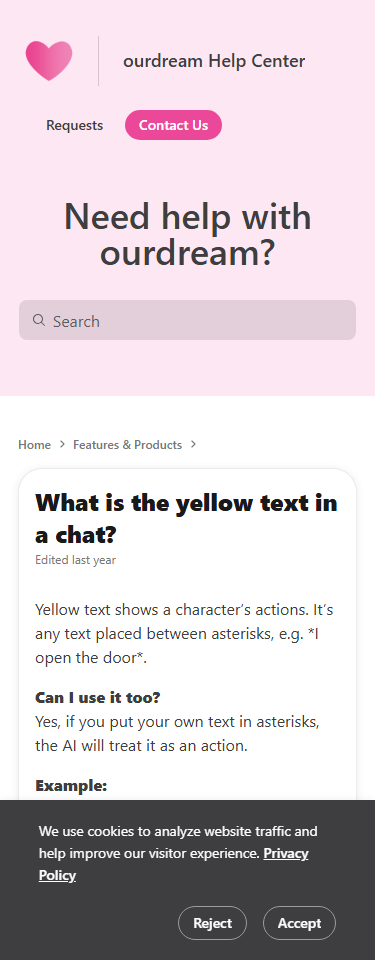
Keep the recipe card in the anniversary scene as a visible prop: *I lay the stained card beside the pan.* OurDream's help on actions explains the asterisk format; documentation checked October 11, 2026. Follow the movement with your invitation to guess the missing ingredient. Leave Ellis's reaction open rather than using the action line to announce how he feels.
Source screenshot
If you dislike domestic scenes, change the activity while keeping the structure. Two fictional adults might return to a railway platform where they first met and decide whether to take an unplanned day trip. Keep the choice small enough to answer. Do not write the whole excursion before the other character has spoken.
Choose the tone without scripting affection
Use a speaking instruction rather than a promised emotional result. “Keep the humor dry and the dialogue brief” is more usable than “make me feel adored.” An understated husband might mention the stained recipe card once and get on with cooking. A playful husband might propose a new anniversary tradition. Use the behavior-based personality brief for a consistent voice.
You can also say what the scene should avoid: no surprise guests, no invented expensive present and no sudden announcement about a new family milestone. Those limits keep the focus on the occasion you selected.
Keep the anniversary in the present
If a reply starts describing next year's celebration, return to the unfinished action: “Tonight's recipe is still undecided. Stay at the kitchen counter and let me choose what we cook.” If it recites the full relationship history, ask for one memory attached to the object already in the scene. There is no need to supply a longer biography to repair that single detour.
An anniversary is not a reason to skip earned relationship development. If the characters are still getting to know each other, choose an earlier occasion or use the slow-burn stage guide. A shared date can create an opening without declaring a commitment the story has not established.
Pick a starting profile that fits
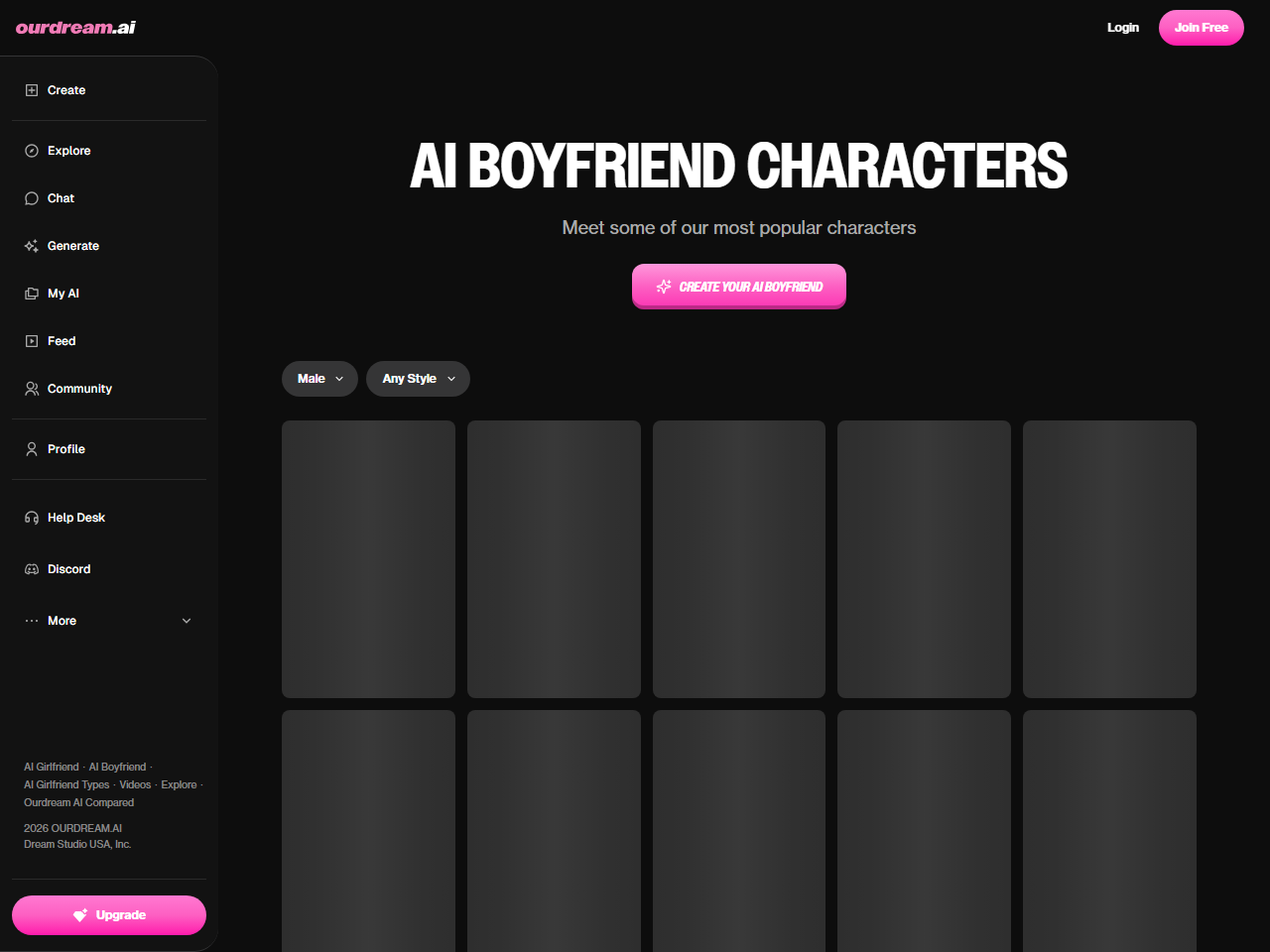
The OurDream male-character entry, checked October 11, 2026, labels its male-character section and offers a creation entry. Read your chosen profile's own description before adapting the evening. The fresh public-entry screenshot below shows that heading and creation entry.
Source screenshot
This exercise suits someone who enjoys directing a short fictional occasion. If you want a different kind of marriage, choose another shared detail: the bus route home, the first piece of furniture you bought or the meal that went wrong. Give it one present action rather than turning the opening into a catalogue of milestones.
Basis: public catalog reviewed October 11, 2026; the examples are original adult fiction. They are not paid-chat observations or an automatic anniversary feature. Enter your chosen setup yourself and judge the reply you receive.
Questions
What usually goes wrong.
Does the anniversary have to be a wedding anniversary?
No. State the occasion clearly: first meeting, moving in together or an established fictional wedding. Do not use the date to introduce a commitment that has not happened in the story.
Should I ask for a surprise gift?
You can make a fictional gift part of the premise, but decide whether choosing it is the scene's task. An open-ended surprise can pull the exchange away from the small occasion you intended.
What if the character invents a different number of years?
Restate the one relevant date and return to the current activity. This is a writing correction, not a guarantee of permanent recall.
Can I use a catalog character for the example?
Read that character's own premise first. The Ellis example is invented and is not a public profile biography. Propose the occasion only if the starting story fits it.