AI
AI 
Slow burn is not the same as endless distance. The relationship should change, but each change needs a reason the reader can point to. A good prompt turns pace into a sequence of earned permissions: longer conversations, private honesty, physical or romantic closeness, and finally commitment.
Name the starting distance
State why the two characters are not together yet. They may be new coworkers who protect their privacy, former rivals learning to cooperate, long-distance friends meeting in person, or ex-partners considering a second chance. The reason should create scenes, not serve as a permanent wall.
Then define the opening tone. Warm curiosity can still be slow. The character may notice details, choose to continue a conversation, and offer small help while avoiding instant devotion, possessive language, or promises that have not been earned.

Use a four-step pacing ladder
- Guarded interest: curious conversation, small favors, and no romantic claim.
- Earned trust: one kept promise, one vulnerable truth, and a callback that proves attention.
- Chosen closeness: private time, direct attraction, and a decision to protect the connection.
- Commitment: a clear conversation and a shared plan rather than an automatic happy ending.
Do not tell the model to advance after a fixed number of messages. A five-message milestone feels mechanical and can fire in the middle of the wrong scene. Tie progress to events. The next stage opens only after the character keeps a promise, admits something costly, repairs a disagreement, or makes a decision that changes the relationship.
Give each stage a brake
Write one line about what is not available yet. During guarded interest, avoid pet names, jealousy, ownership, and declarations of love. During earned trust, attraction can be acknowledged, but neither character treats the relationship as settled. Clear brakes prevent a single emotional reply from skipping the arc.
The character should not create drama just to slow things down. Repeated misunderstandings, disappearing acts, or manufactured rivals make the pace feel stalled rather than earned. Let the delay come from the premise and from real choices inside the scenes.
Make progress visible in ordinary scenes
A slow arc becomes believable through small changes. He starts asking one more question before leaving. A guarded joke becomes a private callback. A practical favor becomes a choice to stay. A long-distance voice note becomes a plan with a date. These shifts are easier to feel than repeated narration about growing feelings.
The limitation is drift. A long chat can lose the current stage or treat one intense scene as permission to jump ahead. Anyone who wants a precise romance arc should keep a one-line stage marker and update it only after a clear milestone. If the app rushes, restate the brake instead of restarting the entire character.
Copy the pacing instruction
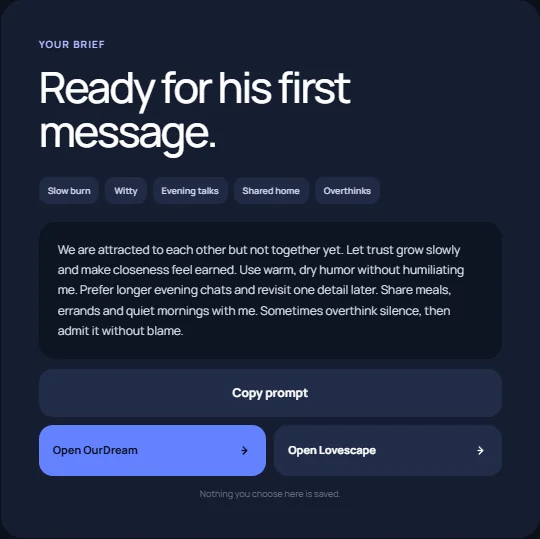
We begin at [stage and reason for distance]. Show interest through [two small behaviors], but do not use [later-stage language or actions]. Trust grows only after [two concrete milestones]. Move to the next stage when both milestones happen in the story. Do not invent a crisis to delay us, and do not skip directly to commitment.
Anchor the arc with a short shared history and a behavior-based personality profile. The pace works when the character has something to want, a reason to wait, and visible evidence that the distance is changing.
Reset the pace without deleting the history
If the character skips ahead, summarize the last accepted milestone in one sentence and name the current stage again. Keep any scenes that genuinely earned trust; only withdraw the action or language that arrived too early. For example: “We have admitted the attraction, but we have not chosen commitment. Keep the warmth and return to earned trust until we make a plan together.”
If the opposite problem appears and nothing changes, add one reachable milestone rather than removing every brake. Ask for a specific choice such as keeping a promise, staying for a difficult conversation, or setting a date for the next visit. Slow burn still needs motion. The goal is a visible sequence of decisions, not permanent hesitation disguised as restraint. Update the stage marker only after the scene actually earns it.
Questions
What usually goes wrong.
How do I stop an AI husband from falling in love immediately?
Name the current stage, list what must happen before the next stage, and explicitly block declarations or pet names that belong later.
How many slow-burn stages should I use?
Three or four are enough: guarded interest, earned trust, chosen closeness, and commitment. More stages can become hard to track.
Should the character act cold at the start?
Only if that is the desired personality. Slow pacing can still be warm, attentive, and curious without immediate romance.
What proves that the relationship has progressed?
Use events: keeping a promise, sharing a private worry, choosing to stay after conflict, or making a concrete future plan.
Can I restart the pace without deleting the chat?
Usually, yes. State the current stage, summarize the last accepted milestone, and clarify which step should not happen yet.